

Table of Contents
If you run Google Ads for a small business, you know the weekly ritual: open Ads, open Analytics, open Search Console, export three CSVs, and try to work out what actually happened. On 19 November, xAI gave that job to Grok Bot Google Ads. Grok Bot’s official connectors for Google Ads and Google Analytics are now live, alongside the Search Console connector that went live the day before.
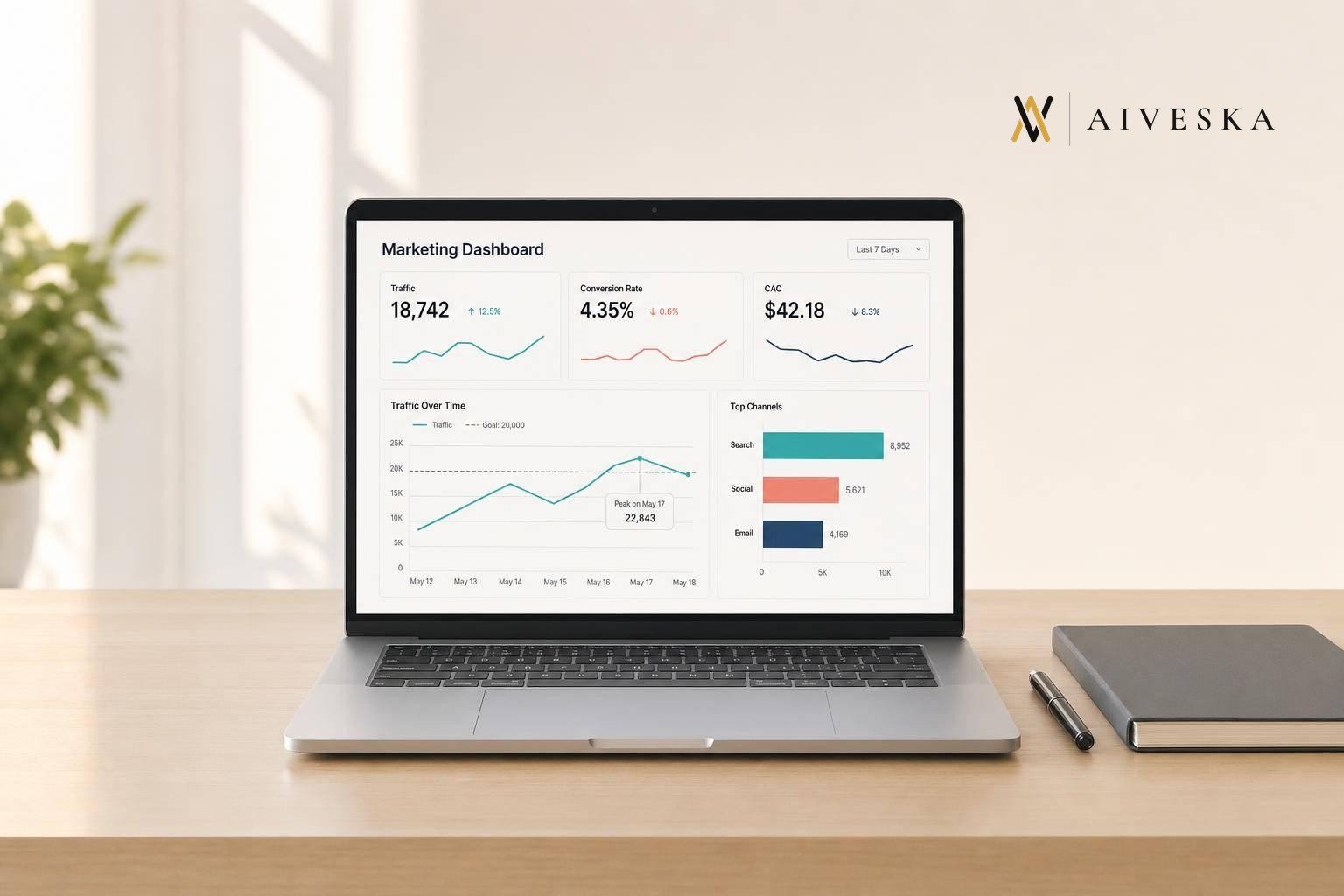
The pitch is simple. Instead of exporting data, you ask. “Compare my site’s Search Console clicks and Analytics traffic for the last 28 days. Top 3 fixes? Change nothing.” The bot pulls live data into the chat and answers in plain English. No spreadsheets, no CSVs, no tab-hopping.
What Grok Bot Google Ads connectors actually do
Grok Bot is a separate product from the Grok chatbot. It is a team of always-on agents that work on a shared cloud computer with a browser, files and a terminal, running repeat jobs on a schedule and asking for approval before they act. It launched in beta in August 2026 and is included from the $30-a-month Premium plan.
The new connectors plug that agent directly into the three places a small advertiser lives. Google Ads for what you spent and what it bought. Google Analytics for what visitors did next. Search Console for what Google showed and what got clicked. With all three connected, the useful questions finally work: which campaigns bring visitors who actually buy, which keywords get clicks but no conversions, and what changed since last week.
xAI’s product team says Grok Bot is the first agent platform with official integrations for these services, and that Claude and ChatGPT do not have them yet. That “first” is xAI’s own claim, and it is narrowly true in one sense: in Claude and ChatGPT, Google Ads and Analytics still run through third-party connectors or Google’s own MCP servers. For a small business, the practical difference is setup time — an official connector is one click and one login, not a plugin to configure.
The safe way to let an AI agent near your ad account
An agent with access to your ad account is powerful and, handled badly, expensive. The safe start is read-only, and Grok Bot’s own connector cards point that way: “Grok Bot always asks before making changes. Disconnect at any time.”
Before you connect anything, write down three rules in plain language. What the agent may read. What it may change. And which changes always go past a person first — budgets, pausing campaigns, and anything that spends money. That is the same discipline that works for every agent with access to real accounts, and it costs nothing to set up.
Then run it read-only for a week. Ask for the campaign report, the comparison, the top three fixes. Check every number against Ads and Analytics yourself. If the first week is accurate, let it draft the changes. If it is not, you have lost nothing but a few minutes — and you have learned exactly where the agent cannot be trusted yet.
One open question: xAI has not said whether these connectors work in the EU. If your business is there, check the connector list in the app before planning around it.
Why this matters beyond Grok
The bigger story is the direction of travel. Agents are moving from chatting about your marketing to operating it — reading the ad account, checking the analytics, and proposing the next move. OpenAI’s Dots and Meta’s Muse are heading the same way, and Microsoft’s Copilot now shows agents from several vendors in one control panel.
For a small advertiser, that shift is good news with a catch. The reporting chore that eats an hour a week is about to disappear. But the judgement — what to spend, what to pause, what a number actually means for your business — stays human. The agent that does the reading is only as good as the rules you give it and the checks you run on it.
If you already pay for Grok Premium and you advertise on Google, connect the three connectors read-only this week and ask for one campaign report. It is the fastest way to find out whether an agent can read your ad account — and the cheapest, because you are testing with data, not with spend.
Frequently asked questions
What is Grok Bot Google Ads?
It is the official Google Ads connector for xAI’s Grok Bot, launched 19 Nov 2026 alongside a Google Analytics connector. It lets the agent read your ad account and answer questions about campaigns in plain English, with the bot asking before it changes anything.
How much does Grok Bot cost?
Grok Bot is included from the $30-a-month Premium plan (Super $100/mo, Ultra $200/mo, prices as published on x.ai and verified 26 Oct 2026). The connectors themselves carry no separate charge.
Can Grok Bot change my Google Ads campaigns?
It asks before making changes, and you can disconnect it at any time. Start read-only: let it report and recommend for a week, and only allow changes — with budgets and pauses always going past a human — once you trust its numbers.
Read next
Best AI tools for small business 2026 — where Grok Bot and the other agents fit in a small team’s stack.
Gemini 4 vs Claude vs ChatGPT 2026 — how the big three AI assistants compare before you build your stack around one.







1 Comment